
What Are Templates?
Templates explained: domains, control areas, questions, and how they structure audits
4 min read•Article 1 of 9 in Templates
What Are Templates?
Templates are the foundation of every assessment in AUDIGYD. They define the structure, questions, and scoring criteria that respondents will follow.
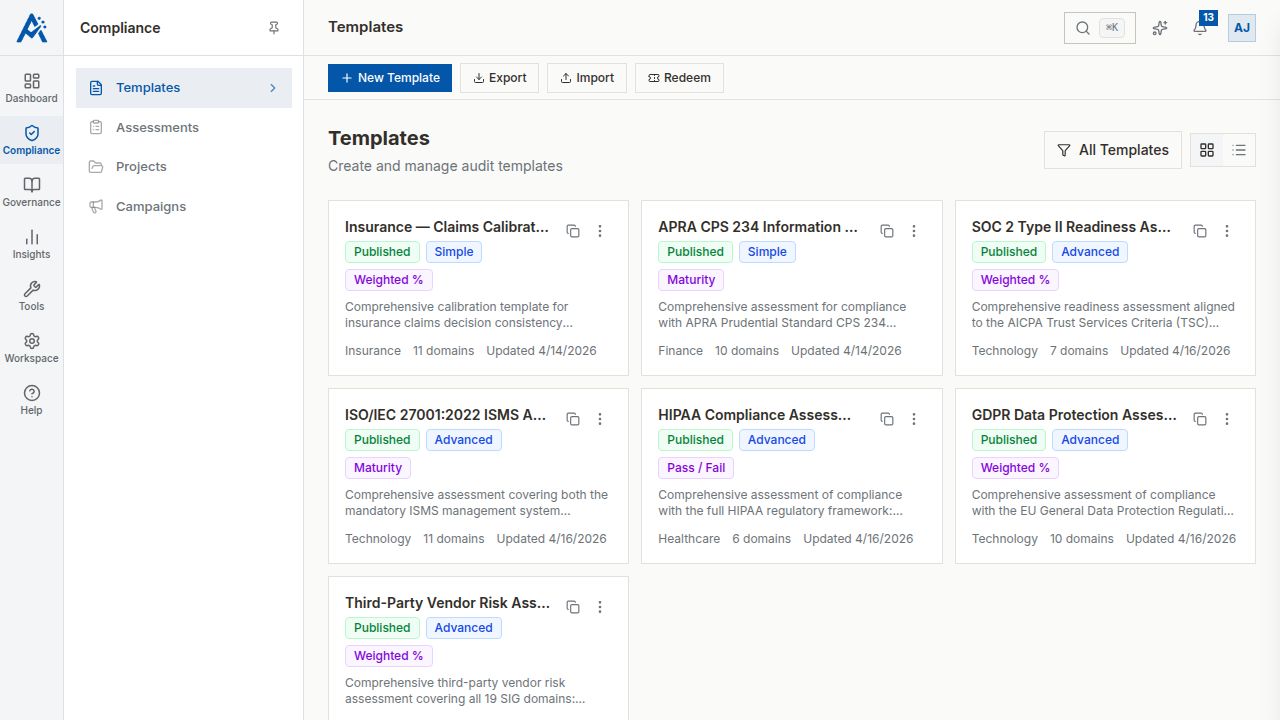
Template Structure
A template is organized into a hierarchy:
1.Template — The top-level container with a name, framework, and settings
2.Domains — Major topic areas (e.g., "Access Control", "Data Protection")
3.Control Areas — Specific control groupings within a domain (e.g., "Password Policy", "Multi-Factor Authentication")
4.Questions — Individual questions within each control area
Question Types
Templates support several question types:
- •Text — Free-form text response
- •Yes/No — Binary response
- •Single Select — Choose one option from a list
- •Multi Select — Choose multiple options from a list
- •Evidence — File upload for supporting documentation
Template Lifecycle
Templates follow a simple lifecycle:
1.Draft — Template is being built and edited
2.Published — Template is finalized and can be used to create assessments
Once published, a template's structure is locked to ensure consistency across assessments. You can create a new version if changes are needed.
Why Templates Matter
Well-designed templates ensure:
- •Consistent assessments across your organization
- •Fair and comparable scoring
- •Complete coverage of compliance requirements
- •Efficient reuse across multiple assessment cycles